The situation in Ukraine has changed dramatically. Re-read Young Guards to understand the history 80 years ago.
Qianjiang evening news Hour News Trainee Reporter Liu Yuhan
On February 24th, Russia took military action against Ukraine, and the situation in Ukraine changed dramatically in one day.
We want to know more about Ukraine.
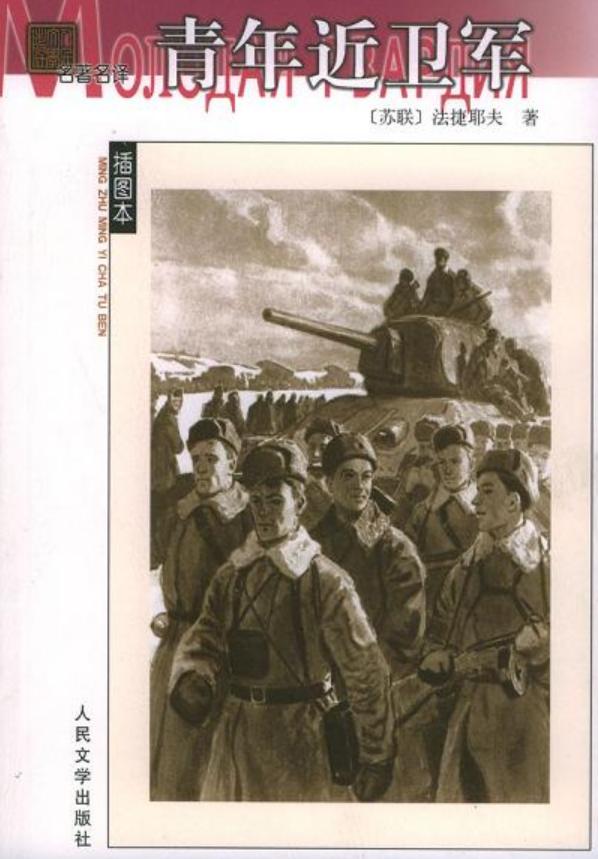
The novel "Young Guards" written by the former Soviet writer fadeev is worth reading. This book tells how young people bravely fought against German fascism 80 years ago, and the story took place in the small Ukrainian town of Krasnoton.
Krasnoton is a coal mining city in Lugansk, which belongs to Donbass region of eastern Ukraine.
In July, 1942, Deco advanced on the city of Krasnoton, and the local residents retreated in a planned way. A group of young people spontaneously formed the underground anti-fascist organization "Young Guards", launched a series of struggles with the enemy and finally died heroically.
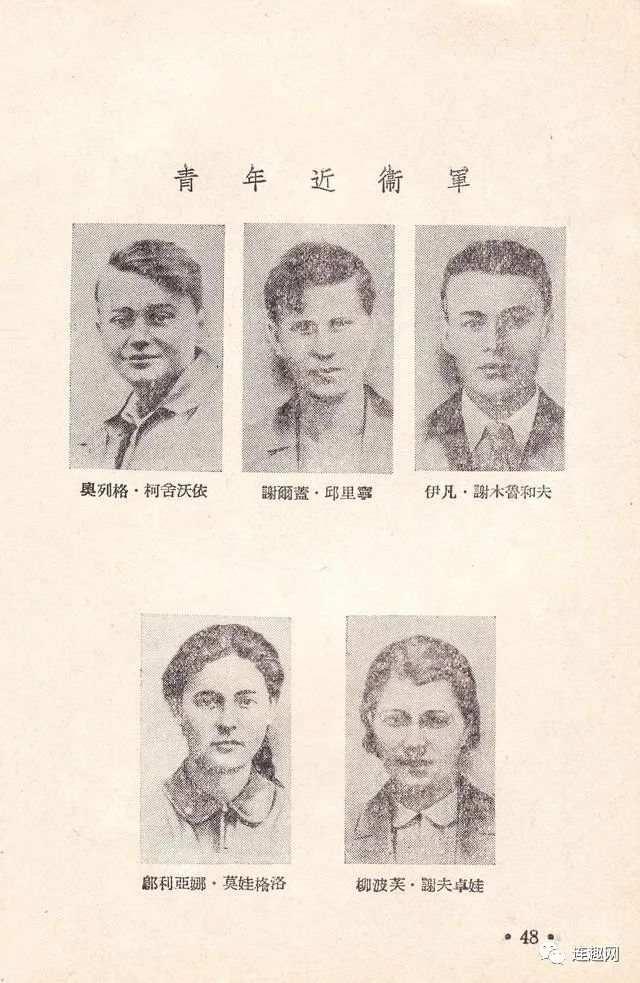
This novel is not a complete fiction. The Young Guards is based on real stories in history.
It was in 1943 that people learned about the deeds of these young people.
On February 14th, Krasnoton was liberated by the Soviet Red Army. On the second day of liberation, people found a large number of dead young people in the No.5 mine, and later 71 bodies were dug up one after another. They are the soldiers of the "Youth Guards" and the local underground party organizations.
On July 20, 1942, the Germans occupied the city of KraSnowden. Shortly thereafter, the local Communist Youth League members spontaneously set up an underground resistance organization, the Youth Guards. This organization has about one hundred members, male and female, and the youngest member is only fourteen years old. The Youth Guards were active until January 1943.
In these five months, the Youth Guards printed and distributed more than 5,000 anti-fascist leaflets in Krasnoton, revealing the real situation on the front line, refuting the demagogic propaganda of the German occupation army, and calling on the people to fight against the German aggressors.
Members of this organization, together with the underground communist party member, destroyed the electromechanical workshop and prevented Nazi Germany from using the Donbass area for arms production.
On the eve of the 25th anniversary of the October Revolution in 1942, the Youth Guards hung eight red flags on the tallest buildings in KraSnowden and its suburbs. On the evening of 5 December, the Youth Guards set fire to the building of the German Labor Exchange (known as the "Black Exchange" by the locals) and burned the labor materials there, thus saving about 2,000 young men and women from Krasnoden from being taken to Germany.
Why did the youth guards with such efficient organization and decisive action only be active for five months?
The turning point took place in January 1943.
At that time, the Soviets defeated the Germans at the front line of Stalingrad. The news came that the Young Guards were preparing to hold an armed uprising and destroy the German garrison, thus cooperating with the advancing troops of the Red Army.
However, a traitor appeared in the organization. Shortly before the planned uprising date, the Youth Guards were exposed.
Forty-nine members of the organization and 22 members of the Lugansk underground party were arrested, and soon they were all thrown into the 58-meter-deep pit of No.5 mine in KraSnowden. Some people were shot there before, and others were pushed into deep pits and buried alive.
It was not until 1943 that Krasnoton was finally liberated that they were discovered.
On March 1, 1943, they were buried in the Communist Youth League Park in Krasnoton Center. All five leaders of the Young Guards had died and were posthumously awarded the title of Soviet hero.
Thirteen other members of the organization were also on the arrest list of the German occupation forces, but they managed to escape. Seven of them went to the front to continue their struggle against the invaders, and three of them died in the subsequent battles.
In 1945, fadeev, a Soviet writer, wrote their story into the novel Young Guards.
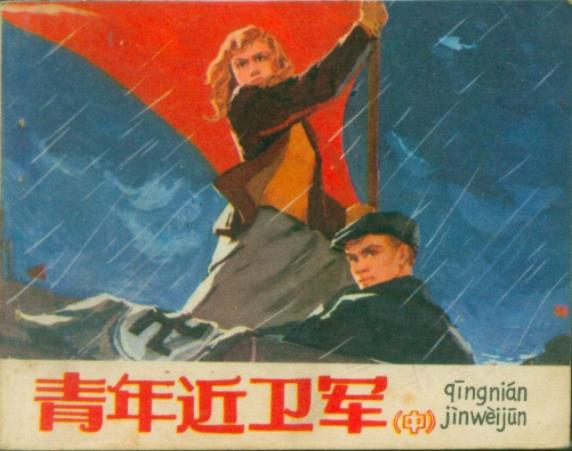
After the book was published, it had a great response in China.
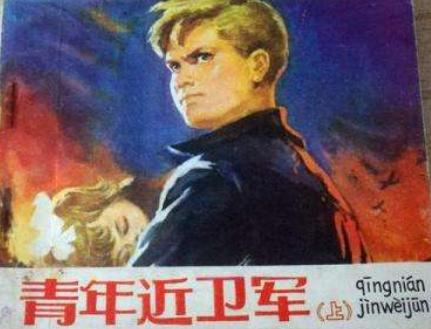
The comic book Young Guards published by People’s Fine Arts Publishing House in 1977 was adapted from this novel and painted by Hua Sanchuan, which is a childhood memory of many people.
In 1948, the film Young Guards directed by Sergei Gerasimov of the former Soviet Union also told this story.
The first novel bought by Liang Xiaosheng, the author and writer of In the World, is Young Guards.
In the interview, he recalled: "The Young Guards was broadcast by our radio station, and there was not much printing, so I just heard it and couldn’t find it anywhere. Later, if there is one in the bookstore, you must buy one. "

At that time, there was only one book (regardless of the upper and lower parts), nearly 400 pages, and it cost more than one yuan and twenty cents, which was a relatively expensive book. At that time, his parents’ salary was about 40 yuan.
"My mother worked as a sewing machine worker in a factory in the street. That was the first time I entered my mother’s factory. It is very important for our family to earn 17 or 18 yuan a month. I asked my mother for money to buy books. At that time, a woman worker nearby tried to stop it,’ You feed them, drink them, go to school, and read casual books for them. But my mother is still willing to give me money to buy books. "
Liang Xiaosheng wrote this scene into the novel Mother’s Love for Mother, which was selected as a primary school Chinese textbook.
Later, Liang Xiaosheng got the Young Guards and got his first novel. 1 yuan’s extra money has built a temple of spiritual world for Liang Xiaosheng, which has also made him step by step on the road of literary creation and propped up a spiritual world of literature.
This article is an original work of qianjiang evening news. Without permission, it is forbidden to reprint, copy, extract, rewrite and spread the copyright of all works on the Internet. Otherwise, this newspaper will pursue the legal responsibility of the infringer through judicial channels.
Reporting/feedback