What "big moves" have governments let go of in order to lose weight?

The Spring Festival is approaching, and with it comes the worry of "gaining three pounds every holiday". Obesity not only affects people’s normal life and work, but also endangers health, safety and psychological state. You know, the existence of fat people has already attracted the attention of the government. In order to encourage weight loss, what "big tricks" have governments let go?
UK: Taxes on enterprises producing sugary drinks are started.

Data Map: The obesity rate of British women is 23%.
In March 2016, the then British Chancellor of the Exchequer Osborne said that excessive drinking of sugary drinks would cause certain diseases. In order to "save the next generation", Britain will start to tax companies that produce sugary drinks. The "obesity tax" is planned to be levied in April 2018, so as to give manufacturers enough time to adjust the product formula.
The obesity rate of British nationals ranks second in Europe, second only to Hungary. Among British people, about 25% are obese, while the average level in European countries is 16.7%. Britain is also one of the western countries with the highest sugar intake. According to a report released by Cancer Research UK in early 2016, if the current trend continues, by 2035, nearly three-quarters of adults in the UK will be overweight or obese.
Dubai, United Arab Emirates: You are responsible for losing weight, and I am responsible for the gold.
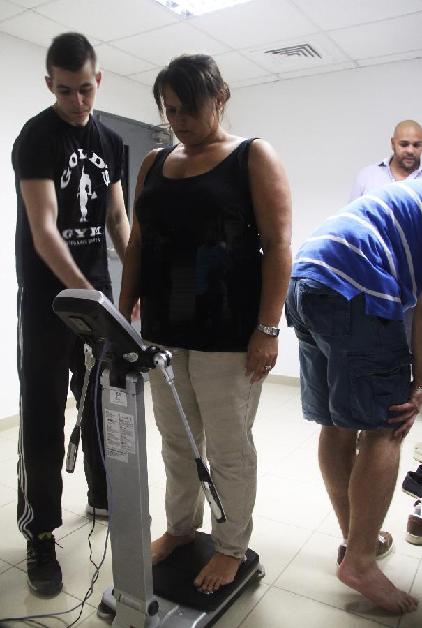
Data Map: On July 19, 2013, in Dubai, United Arab Emirates, a participant in the "Lose Weight for Gold" activity was weighing. Xinhua News Agency reporter Li Zhenshe
Dubai, whose living standard has deviated from the average level of the earth, is also very simple and rude in controlling the obesity rate.
In 2013, Dubai, United Arab Emirates launched the "Weight Loss for Gold" campaign. For every kilogram of weight lost, participants can get one gram of gold, provided that they lose at least two kilograms.
In 2014, Dubai once again held a competition to lose weight and earn gold. Every child who successfully lost 1 kg could get 1 gram of gold, worth about 31 euros. If the participating children are between the ages of 2 and 14, their rewards will be doubled.
However, it has been reported that although this initiative has indeed enabled Dubai residents to lose weight successfully, for children, rapid weight loss may have serious consequences for metabolism.
Denmark: the first country in the world to levy "obesity tax"

Since 2011, Denmark has become the first country in the world to levy an "obesity tax" to stimulate obese people to lose weight. According to the policy, if consumers buy foods with saturated fat content exceeding 2.3%, they must pay a "obesity tax" of 16 Danish kroner per kilogram of saturated fat.
However, the survey found that in the first year of the implementation of the "obesity tax", Danes paid 200 million kronor more for obese food, but did not change their consumption habits. The number of high-fat and high-calorie foods has not changed, but more products are chosen that are cheaper and perhaps more unhealthy. In November 2012, Danish tax authorities announced that they would abolish the "obesity tax" imposed more than a year ago, on the grounds that this measure was too expensive and failed to change the eating habits of Danes.
Although the proportion of obese people in Denmark is less than 10%, slightly lower than the European average, the Danish Institute of Food and Economics still points out that 4% of the premature deaths in the country are caused by excessive intake of saturated fat. Denmark is the first country to impose a special tax on foods that use trans fats. Denmark also imposes a separate tax on carbonated drinks, while a special surcharge on candy has been imposed for 90 years.
Japan: The waistline exceeds the standard and you can’t go to work.
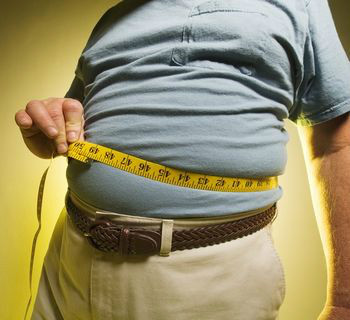
Obesity has always been a personal matter, but it is a national matter in Japan, which is the first country to legislate to control obesity rate.
Since 2008, the Japanese government has implemented a decree to force local governments and enterprises to regularly measure the waistlines of people aged between 40 and 74, with the goal of reducing the obese population by 25% within seven years. The government has also set weight loss targets for residents and employees of relevant institutions, and institutions that fail to meet the standards will be fined.
According to the regulations of the Ministry of Health, Labor and Welfare, the waist circumference of men aged 40 to 74 should not exceed 33.5 inches (about 85 cm), and that of women should not exceed 35.4 inches (about 90 cm), which is the disease prevention regulation set by the International Diabetes Association for Japan. If people who exceed the standard have weight-related diseases at the same time, they will be asked to lose weight. If they still fail to meet the standard after 3 months, they need to accept weight loss suggestions; If you are still overweight after 6 months, you may have to receive weight loss re-education.
"What is your body fat rate now?" Now it has become a topic that Japanese people often talk about. Many restaurants don’t forget to put up the sign "It won’t make your body fat rate increase".
America: If you don’t lose weight, the boss will punish you without consulting.

The United States passed a new medical bill in 2010, including allowing enterprises to implement punitive measures. If employees’ health indicators such as blood pressure, cholesterol and weight fail to meet the standards and do not improve their living habits, they may face fines. Many employers are very happy about this. Because obese employees will make them bear more medical insurance, and the chances of taking vacations due to illness are higher.
New Zealand: Drive away fat people from abroad

In New Zealand, obesity has become a threshold for applying for a visa.
In 2013, a citizen from South Africa was refused to renew his visa to New Zealand because he was overweight. Immigration New Zealand said that obese people will bring a burden to the country’s health care system.

Data Map: In May 2013, due to the serious overweight, Albert Buyitens’ application for renewing his work visa was rejected.
Coincidentally, in 2014, a British nurse weighing 134 kilograms was also rejected by the New Zealand Immigration Service. The doctor who conducted the medical evaluation thinks that if the nurse wants to live in New Zealand for four years, the medical expenses paid by the New Zealand government for her may be as high as NZ $25,000.
Don’t raise the average obesity level of our people here-the New Zealand government has expressed "malice" to overweight people in this way. It seems that if you want to go to New Zealand, you must first pay attention to your weight.
(Editor: Li Yixing’s text synthesis Xinhuanet, World Wide Web, Zhongxin. com)