National Network Information Office: Providing generative artificial intelligence services is intended to prohibit illegal disclosure of personal information.
This article is transferred from [CCTV News Client];
The reporter learned from the National Network Information Office yesterday (11th) that in order to promote the healthy development and standardized application of generative artificial intelligence technology, the National Internet Information Office drafted the Management Measures for Generative Artificial Intelligence Services (Draft for Comment) according to the Cyber Security Law of the People’s Republic of China and other laws and regulations.
The National Network Information Office solicited opinions on the service management of generative artificial intelligence.
There are 21 articles in the Draft for Comment, among which it is clear that generative artificial intelligence refers to the technology of generating text, pictures, sounds, videos, codes and other contents based on algorithms, models and rules. In addition, the provision of generative artificial intelligence products or services shall comply with the requirements of laws and regulations, respect social morality, public order and good customs, and meet the following requirements:
The content generated by generative artificial intelligence should reflect the core values of socialism, and should not contain any content that subverts state power, overturns the socialist system, incites secession, undermines national unity, promotes terrorism and extremism, promotes ethnic hatred, ethnic discrimination, violence, obscene pornographic information, false information, and may disturb economic and social order.
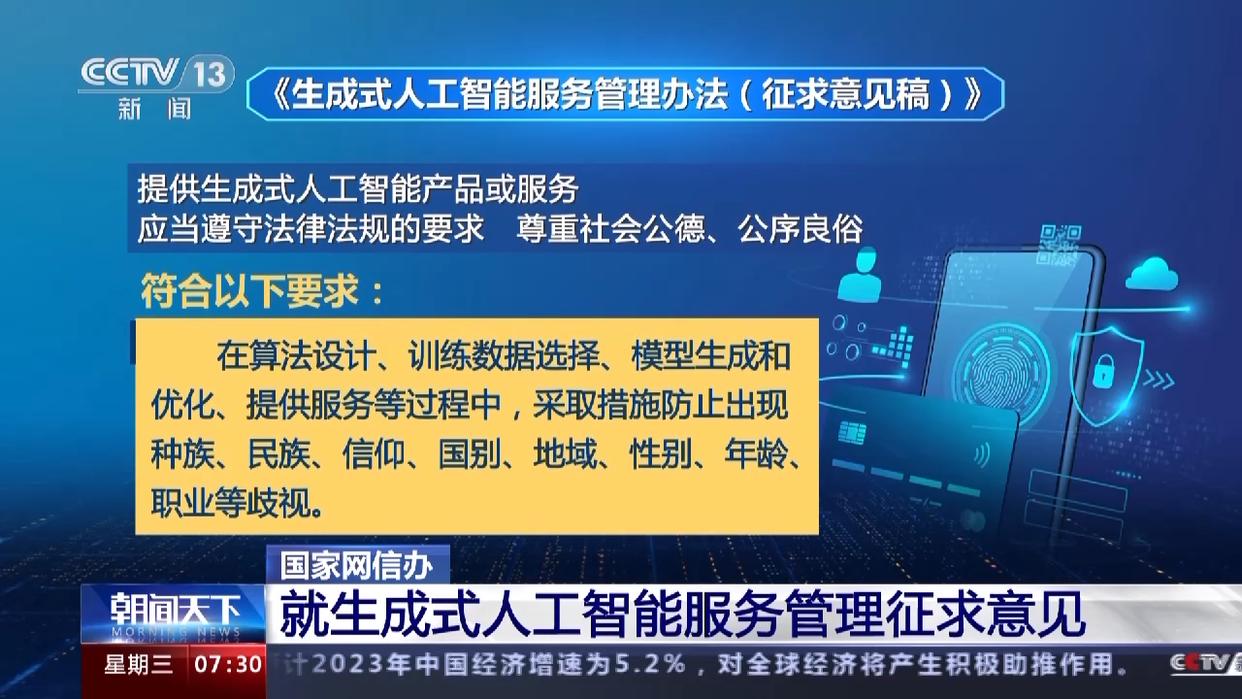
In the process of algorithm design, training data selection, model generation and optimization, and service provision, measures are taken to prevent discrimination such as race, nationality, belief, country, region, gender, age and occupation.
Respect intellectual property rights and business ethics, and do not use the advantages of algorithms, data and platforms to implement unfair competition.
The content generated by generative artificial intelligence should be true and accurate, and measures should be taken to prevent the generation of false information.
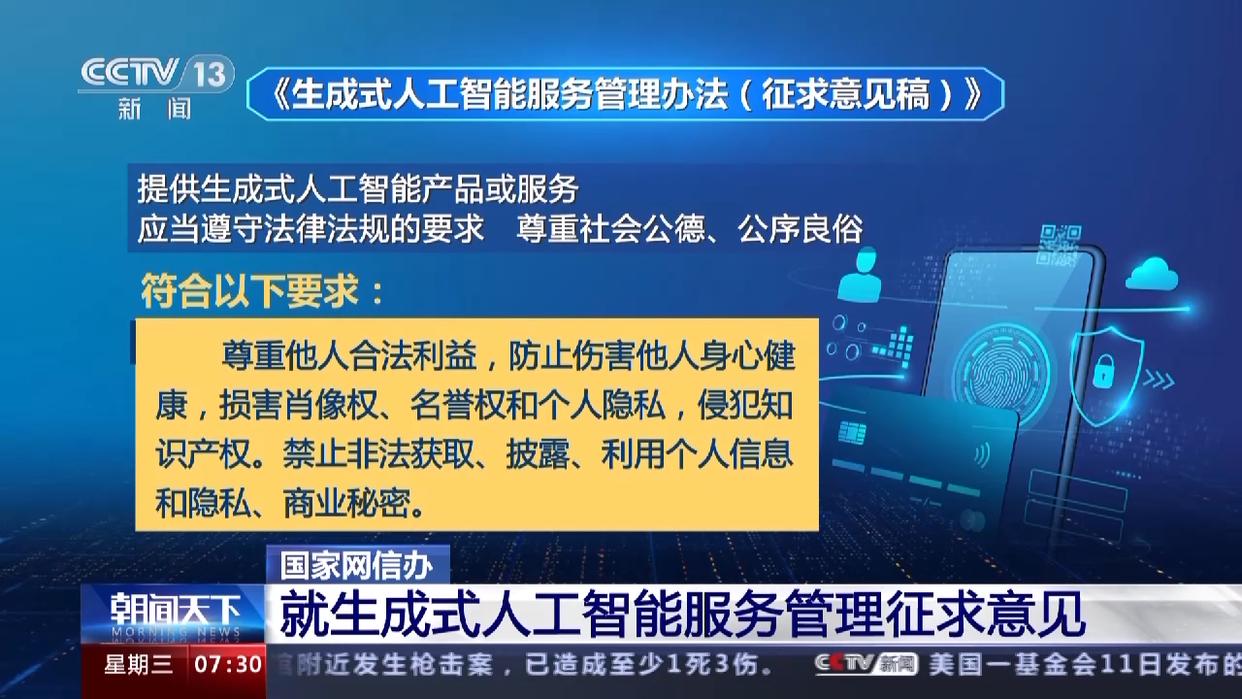
Respect the legitimate interests of others, prevent harm to the physical and mental health of others, damage the right of portrait, reputation and personal privacy, and infringe on intellectual property rights. Illegal acquisition, disclosure and use of personal information, privacy and business secrets are prohibited.
The public can feedback relevant opinions by logging in to the Ministry of Justice of the People’s Republic of China, the Legal Information Network of China Municipal Government, e-mail, letters, etc. The deadline for feedback is May 10, 2023.
Safety assessment shall be declared before providing services.
The "Exposure Draft" proposes that before using generative artificial intelligence products to provide services to the public, it is necessary to declare the safety assessment to the national network information department. In addition, the data used for generative artificial intelligence products must meet the regulatory requirements of relevant laws and regulations.
The "Draft for Comment" proposes that before using generative artificial intelligence products to provide services to the public, the security assessment should be reported to the national network information department in accordance with the "Regulations on Security Assessment of Internet Information Services with Public Opinion Attributes or Social Mobilization Ability", and the procedures for algorithm filing, modification and cancellation should be fulfilled in accordance with the "Regulations on the Recommendation and Management of Internet Information Service Algorithms".

The provider shall be responsible for the legality of the pre-training data and the source of the optimized training data of the generative artificial intelligence products. Pre-training and optimized training data for generative artificial intelligence products shall meet the following requirements:
Comply with the requirements of the Cyber Security Law of the People’s Republic of China and other laws and regulations;
It does not contain any content that infringes intellectual property rights;
If the data contains personal information, it shall obtain the consent of the subject of personal information or meet other circumstances stipulated by laws and administrative regulations;
Can ensure the authenticity, accuracy, objectivity and diversity of data;
Other regulatory requirements of the national network information department on the service of generative artificial intelligence.
Do not use AI to generate content to damage the image and reputation of others.
The "Draft for Comment" proposes that organizations and individuals who use generative artificial intelligence products to provide services such as chatting and text, image and sound generation should bear the responsibility of the producers of the products. In addition, it is required not to use the generated content to damage the image, reputation and other legitimate rights and interests of others.
The "Draft for Comment" proposes that providers should bear the obligation to protect users’ input information and usage records in the process of providing services. The input information that can infer the user’s identity shall not be illegally retained, the portrait shall not be made according to the user’s input information and usage, and the user’s input information shall not be provided to others.
The provider shall establish a mechanism for receiving and handling user complaints, and timely handle personal requests for correction, deletion and shielding of their personal information; When it is found or known that the generated text, pictures, sounds and videos infringe on others’ portrait rights, reputation rights, personal privacy and business secrets, or do not meet the requirements of the Administrative Measures for Generative Artificial Intelligence Services (Draft for Comment), measures shall be taken to stop the generation and prevent the harm from continuing.
In addition, providers should guide users to scientifically understand and rationally use the content generated by generative artificial intelligence, and do not use the generated content to damage the image, reputation and other legitimate rights and interests of others, and do not engage in commercial speculation or improper marketing.
Reporting/feedback