Observation | Farewell to Liuting and Welcome to Jiaodong: The Ambition of "Big Airport Era" to Support Qingdao?
"There is Qingdao on the sea, and there is no red dust in my heart. If I hear this sentence again, I will not land at Liuting Airport." From 0: 00 on August 12th, Qingdao Jiaodong International Airport officially switched operations, and Liuting International Airport was closed simultaneously.
With a total investment of 36.039 billion yuan, the first phase of Jiaodong Airport is the first 4F-class international airport in Shandong, which is equivalent to large hub airports such as Beijing Daxing International Airport, Shanghai Pudong International Airport and Chengdu Tianfu International Airport. According to the plan, by 2025, it can meet the demand of passenger throughput of 35 million passengers, cargo and mail throughput of 500,000 tons and aircraft take-off and landing of 300,000 sorties.
Geographically, Jiaodong Airport is located on the northwest coast of Jiaozhou Bay, with a linear distance of about 28km from Liuting Airport and a shortest distance of about 55km from downtown Qingdao. Therefore, many netizens spit out that the new airport is getting farther and farther away from the door of the house. "If you take the subway, you can ensure that you can catch the flights that take off after 8 o’clock."
Saying goodbye to Liuting and welcoming Jiaodong, the handover of new and old airports is far more than the superposition of passenger throughput and geographical spatial displacement. According to the internationally recognized airport input-output ratio of 1∶8, what other chain reactions may Qingdao have when it enters the "big airport era"?
Old and new changes
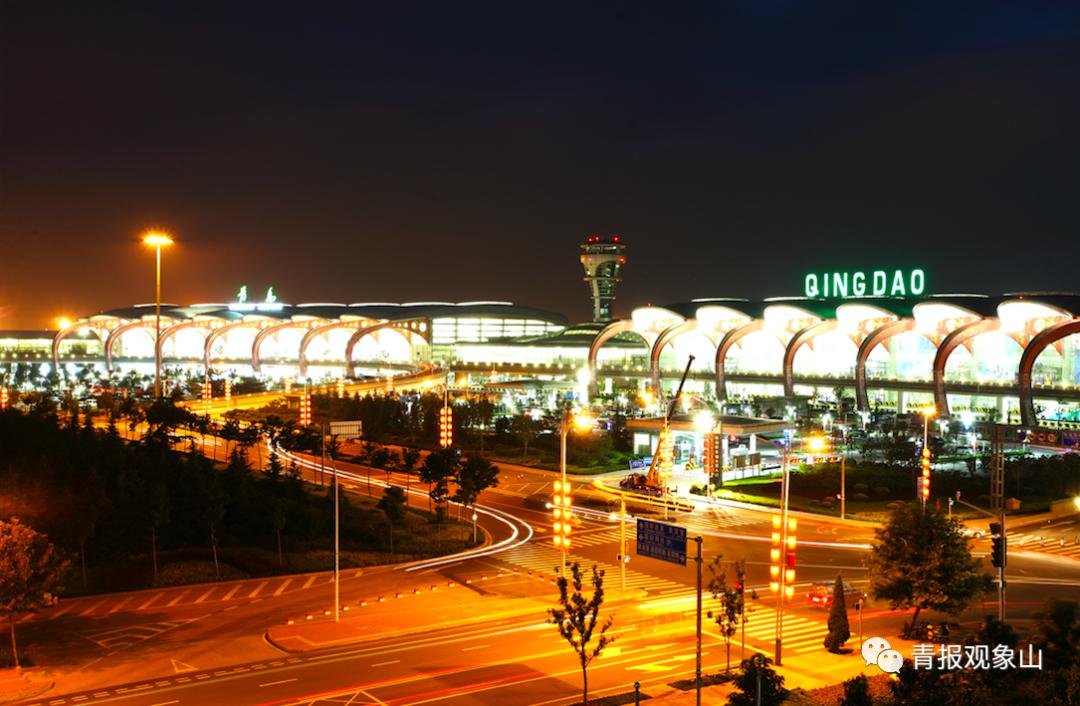
Image source: Qingdao Daily
Limited by hardware facilities, Liuting Airport has been overloaded for many years. In November 1982, Qingdao Civil Aviation Station resumed its flight at Liuting Airport, ending the history that Qingdao had no civil aviation airport. Since then, after three phases of expansion, it has once become the largest airport in Shandong and the top ten in national competitiveness.
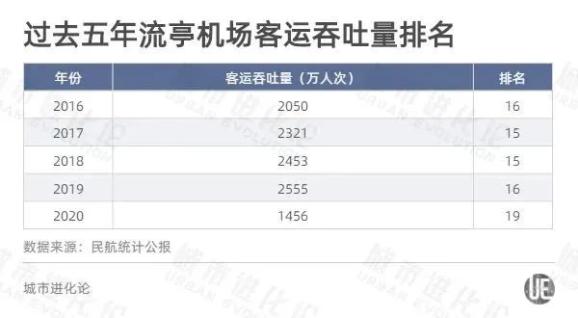
However, the speed of airport expansion can’t keep up with the surge of passengers. According to the original design of Liuting Airport, the annual passenger capacity was 12 million passengers, which was increased to 18-20 million after expansion in 2013. However, since 2016, the number of passengers at Liuting Airport has exceeded 20 million, and it has been overloaded for many years, which can be described as stretched.
A more intuitive data, before, the number of people entering and leaving the terminal building of Liuting Airport reached more than 100,000, but there were only 46 bathrooms in the terminal building.
"Changing venues" happened overnight, but Qingdao has been preparing for it for more than ten years. In 2010, the local government put forward the strategic concept of the new airport. In 2011, it was included in the Outline of the Twelfth Five-Year Development Plan and the Twelfth Five-Year Development Plan of Civil Aviation, and it was positioned as a regional gateway hub airport. In 2014, it was approved by the State Council and the Central Military Commission; The project officially started in 2017; The project will be fully completed in 2020.
Compared with the 4E-class Liuting Airport with only one runway and 14 covered bridges, the terminal and flight area of 4F-class Jiaodong Airport have been expanded by more than four times, and the functions and hardware facilities have been iteratively upgraded:
Liuting Airport has only one 3400-meter-long runway, and Jiaodong Airport has two 3600-meter-long independent parallel long-distance runways. There are 70 seats in Liuting Airport, 184 seats in Jiaodong Airport and 76 groups of near seats, which is the largest number of airports with the same volume in China at present.
While looking forward to the future, many people have led the topic to the traffic problem of Jiaodong Airport, which is far from the city center and takes twice as long to drive as going to Liuting Airport.
Someone asked why Qingdao didn’t choose to keep the pavilion and build "one city, two games". Previously, Qingdao government affairs network responded that Qingdao could not implement "double airports" because the two airports were too close according to the civil aviation flight regulations, and there were security risks in flight.
Lin Zhijie, a civil aviation expert, also told Uncle Cheng that for the cities of Beishangguang, Chengdu and Chongqing, because the market is too big, "one airport can’t eat", there will be a need to build two airports.
For Qingdao, a single airport with a large enough capacity is a more intensive and efficient scheme-airlines can minimize the occupation of urban land and airspace resources without two operations.
Make Qingdao bigger.
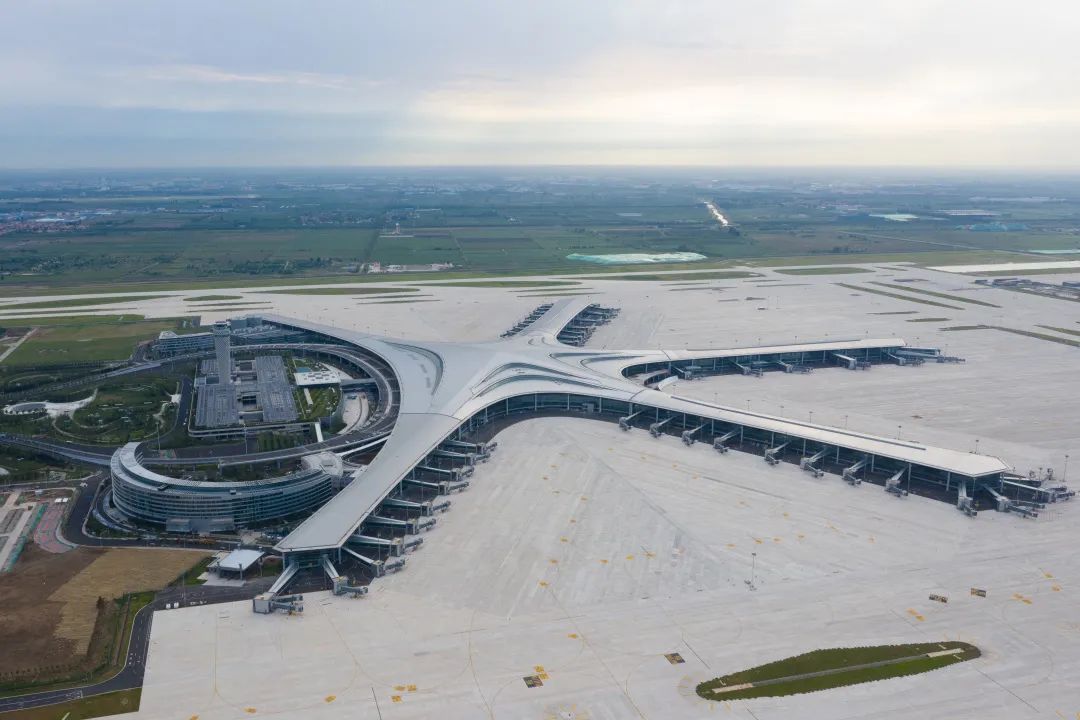
Image source: photo network
From Liuting Town in Yangcheng District to Jiaozhou, 28 kilometers away, it actually reflects Qingdao’s determination to "advance northward".
For a long time, Qingdao has pursued the path of development to the south, while the vast areas such as Laixi and Pingdu in the north have developed slowly. For example, the land area of Laixi and Pingdu in the north is 4,743.87 square kilometers, accounting for 42% of the city, and the permanent population is 1,911,400, accounting for 19% of the city, but they only contribute about 10% of the city’s GDP.
This north-south gap has become a prominent constraint for Qingdao’s development and growth. The northward movement of the airport has objectively enlarged the urban skeleton of Qingdao, which will drive people flow, logistics, capital and industry to gather in the north. Some people think that the northward movement of this major transportation hub is to conform to the long-term strategy of Qingdao as a leading city to expand its wings and develop northward, and accelerate the coordinated development of the city.
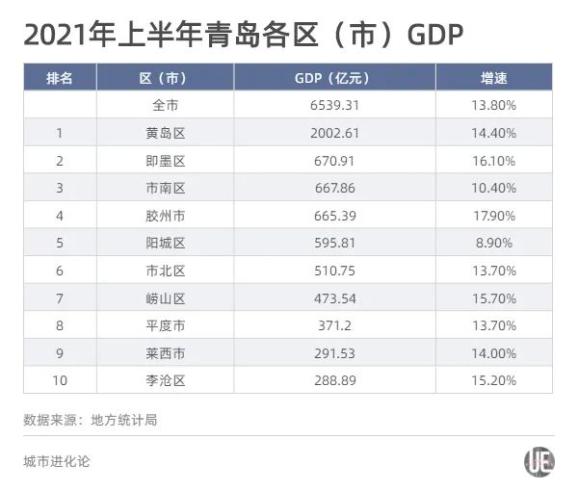
In recent years, the government of Qingdao regards northern cities such as Pingdu and Laixi as the focus of promoting regional coordinated development. From the data point of view, in the first half of this year, Qingdao achieved GDP of 653.931 billion yuan, Jimo ranked second with 67.091 billion yuan, and Jiaozhou ranked fourth with GDP of 66.539 billion yuan.
It is worth mentioning that the economic growth rates of Jiaozhou, Jimo, Pingdu and Laixi are 17.9%, 16.1%, 13.7% and 14% respectively, all of which rank among the top in the city.
According to the "1: 8 effect" in the civil aviation industry, the total investment in the infrastructure of the new airport and airport area is more than 90 billion yuan. It is estimated that the output brought by the large investment in the airport and airport area will exceed 700 billion yuan. According to another plan, by 2025, Jiaodong Airport can meet the passenger throughput of 35 million passengers and the cargo and mail throughput of 500,000 tons.
"According to the evolution logic of port, production and city, taking Beijing Capital Airport as an example, when it reached the peak of 100 million passengers, it gathered about 8,000 enterprises and more than 200,000 residents, which is a new type of town." Ma Jian, Secretary-General of China City Airport Economic Research Center, believes that this can roughly deduce the driving effect of the new airport on local industries in Qingdao.
At present, relying on the opening of the new airport, Jiaozhou has further built a 139-square-kilometer airport economic demonstration zone, and made great efforts to build a 100-billion-level airport industrial chain integrating aviation scientific research, aviation manufacturing, aviation operation, aviation maintenance and aviation preference industries by building a "3+4+4" modern airport industrial system.
Ma Jian told Cheng Shu that Jiaodong Airport Economic Demonstration Zone is also a national airport demonstration zone. Relying on the new airport to develop high value-added industries such as aviation industry and high-tech manufacturing industry is a good boost to the transformation and upgrading of local industries.
It is worth noting that a few days ago, the semi-annual report of urban economy was released, and Ningbo and Wuxi, which are in the 600 billion range with Qingdao, are also adding aerospace industries. In August last year, Wuxi won the first local aviation company, and Ningbo was also named many times in the "14 th Five-Year Plan for the Development of Aerospace Industry in Zhejiang Province".
Starting from the same track, whether Qingdao can rely on the opening of the new airport to further improve the level of high-end manufacturing industry will also affect whether it can stand out from the competition with Wuxi and Ningbo.
Poly Jiaodong
Image source: photo network
The benefits are not limited to Qingdao. At present, urban agglomeration has become the main spatial form bearing development factors, and the radiation ability of economic circle has become an important "score" in urban competition. The 12 urban agglomerations represented by Beijing-Tianjin-Hebei, Yangtze River Delta and Pearl River Delta account for more than 80% of the country’s total economic output.
2020 is the first year of the integration of Jiaodong economic circle. In January of that year, the Shandong provincial government issued the Guiding Opinions on Accelerating the Integrated Development of Jiaodong Economic Circle, and Qingdao was given the "lead" and played a leading role.
At the joint promotion meeting of five cities in Jiaodong held in December of that year, Wang Qingxian, then secretary of Qingdao Municipal Committee, bluntly said,
"China’s northern economy must enter a stage of rapid growth, and it is urgent to create new growth poles and power sources. As the leader of the Shandong Peninsula urban agglomeration and the economic outlet of the Yellow River Basin, Jiaodong Economic Circle is bound to play an important role in promoting the high-quality economic development of the active Yellow River Basin and even northern China. "
To gather momentum and be strong, the first thing is interconnection, and in the face of all interconnection, it is a consensus that transportation interconnection should go first. The name of Jiaodong Airport has demonstrated Qingdao’s ambition. From a larger geographical perspective, Jiaodong Airport is at the center of the T-shaped structure of Rizhao-Weihai-Weifang in Shandong Peninsula.
Dong Yanling, Dean of the Regional Economic Research Institute of Shandong University of Finance and Economics, told Cheng Shu that Qingdao is in a relatively marginal and weak area in the next "big game"-Jiaodong Airport. It is definitely a consideration to use the airport to drive the development of this area and expand the economic hinterland.
At the same time, Dong Yanling also stressed that we should take this opportunity to build the whole three-dimensional transportation system, which has the main responsibility and the support, and enhances the accessibility and activity of the whole Jiaodong area, that is, the activity of the central city.
Limited by geographical location for a long time, Qingdao is at the end of the national railway network, and the density of railway trunk road network is insufficient, which restricts the city’s passenger and cargo shipping and transit capacity and becomes the constraint of Qingdao railway development.
According to the goal of Jiaodong International Airport, to build a "world-class, domestic leading" Northeast Asia international aviation hub will not only realize zero transfer of aviation, high-speed rail, high-speed rail, subway and other modes of transportation, but also form an "all-pass" integrated transportation hub integrating air and land.
Just before the opening of Jiaodong Airport (August 9), Qingdao Airport Station of Jiqing High-speed Railway was officially opened. According to the initial planning of the railway department, 10 EMU trains will be arranged to run directly to Qingdao, Jinan, Zibo, Weifang, Rizhao and Linyi. The nearest one is Weifang, which is about 28 minutes away from Jiaodong Airport.
Traffic connects the flow of various factors of production between cities. With the distance between cities in Jiaodong economic circle getting closer, it creates more opportunities for further benefit sharing. Weifang Gaomi, for example, took the lead in planning a 36-square-kilometer port-facing economic zone, which was "two-way docking" with Qingdao and actively accepted the radiation influence of Qingdao Airport Economic Zone.
In June this year, Qingdao-Weifang Airport-Port Cooperation Zone was written into Qingdao New Urbanization Plan (2021-2035) (draft for public comment). Some people think that if the airport-port cooperation zone can become one of the breakthroughs in Jiaodong integration, it will become a turning point in the integrated development of Jiaodong economic circle and even peninsula urban agglomeration.
Cover image Source: Qingdao Daily
Text | Yang Huan Danzhongkui
Original title: "The era of big airports" supports the ambition of big Qingdao? 》
Read the original text